
Owners are reporting leaks
Send the unit numbers, where the water appears, and when it happens. CSI will recommend a test scope to find the source.
Request a water test proposal →When a window, door, or wall leaks, the stain inside rarely marks the point of entry. Construction Solutions, Inc. finds the source with controlled field water testing led by a licensed professional engineer, then documents the water path and the recommended repair in a clear report. Water testing is daily work at CSI, for associations from Amelia Island to St. Augustine and along the Georgia coast.
Start with the situation at your building
A recurring leak, a window replacement project, and a reserve study can each be a reason for water testing. Pick the one closest to where your board is now.
Send the unit numbers, where the water appears, and when it happens. CSI will recommend a test scope to find the source.
Request a water test proposal →Field testing of installed units, written into the specifications, can catch installation problems while the installer is still on site.
See how chamber testing works →Windows, exterior doors, and waterproofing are required SIRS components. Test results can give the engineer evidence of how they are performing.
Review Florida SIRS services →Licensed professional engineersField water testing every working dayPhoto-documented reportsRepair specifications and retesting
Water intrusion testing attempts to reproduce a reported leak under controlled conditions so the source can be identified and documented. CSI applies water to one window, door, wall, or balcony component at a time while an observer watches the interior, then confirms the water path with moisture meters, infrared imaging, and, where needed, a small inspection opening.
In CSI's experience, most leaks in Florida condominiums start at a joint between two materials: a window frame and the stucco around it, a door threshold and the balcony slab, a railing post and the concrete it is set in. CSI tests each of these as a separate element so the report can say exactly which one is failing.
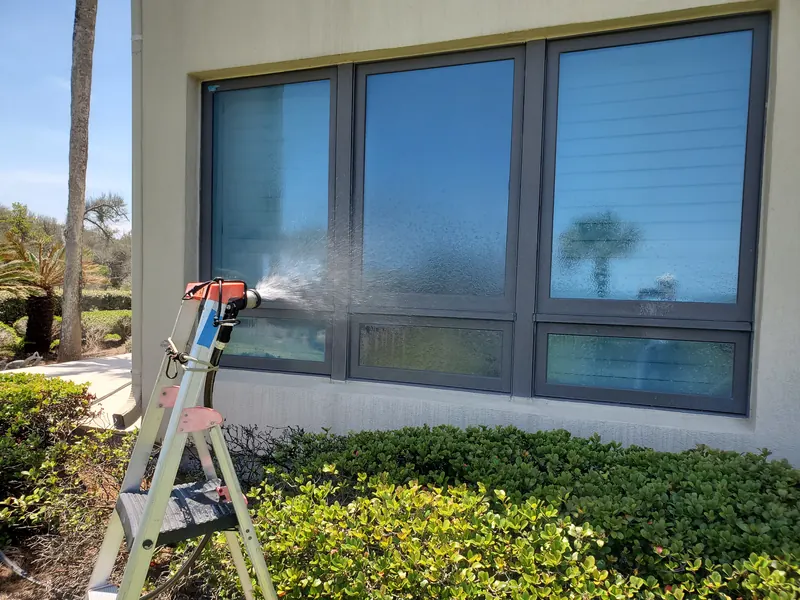
Glazing seals, frame corners, mullion joints, and the window-to-wall perimeter, tested separately so the report can say whether water enters through the window or around it.
Condominium, Amelia Island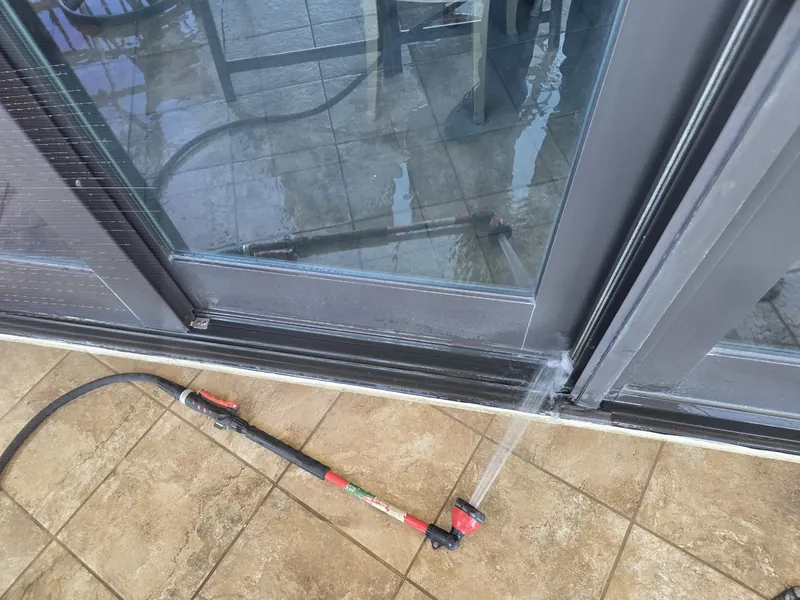
Thresholds, sill pans, track drainage, and the joint between the door frame and the balcony slab.
Condominium, Amelia Island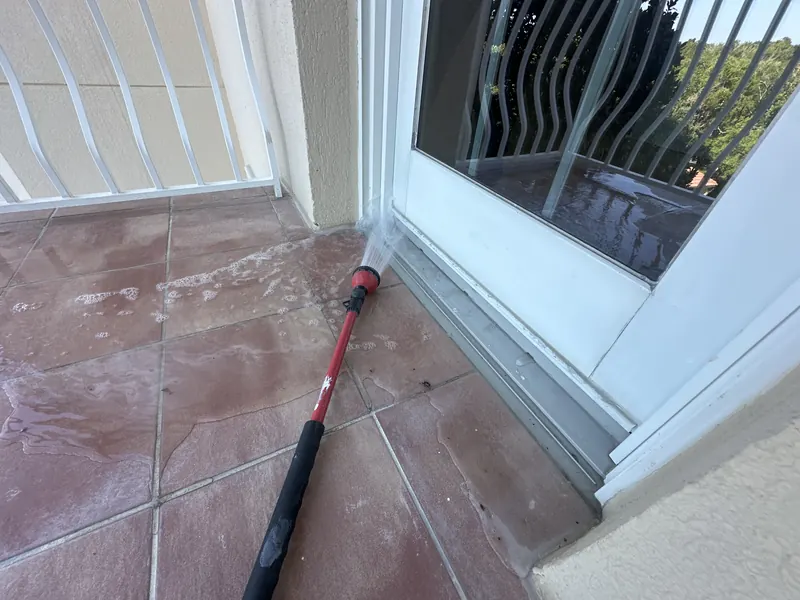
Door thresholds, frame corners, and the transitions between the door frame, the floor finish, and the wall.
Condominium, Amelia Island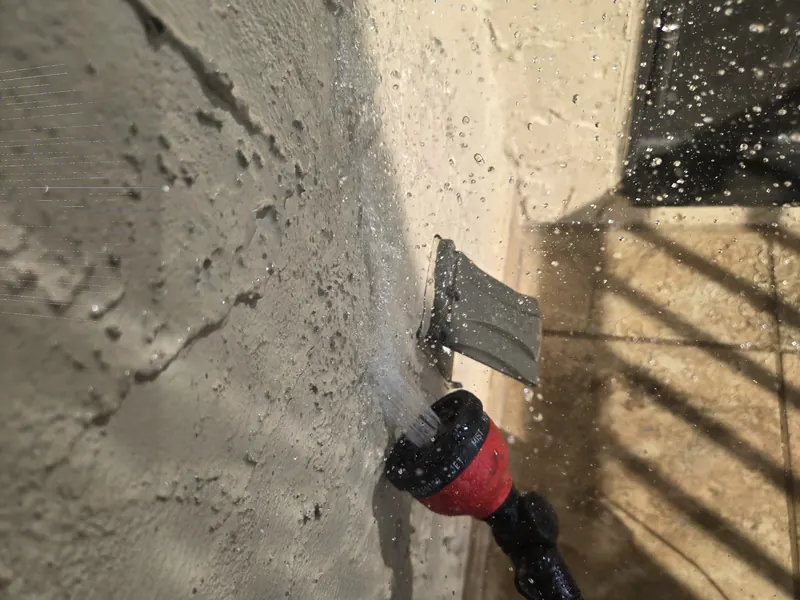
Cracks, control joints, and penetrations such as vents and fixtures, where water can get behind the stucco and into the wall.
Condominium, Amelia Island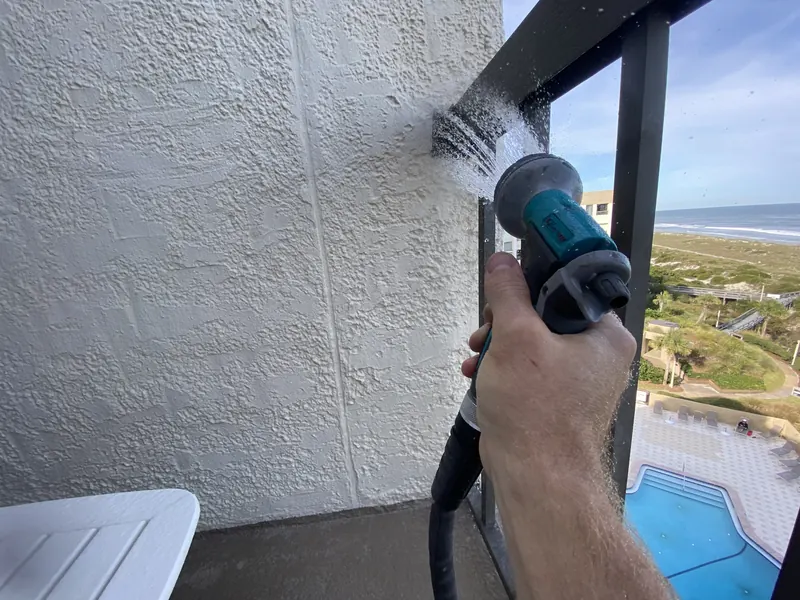
Railing post bases, railing-to-wall connections, and slab edges, where water entry can lead to concrete deterioration and corroded reinforcing steel.
Oceanfront condominium, Amelia Island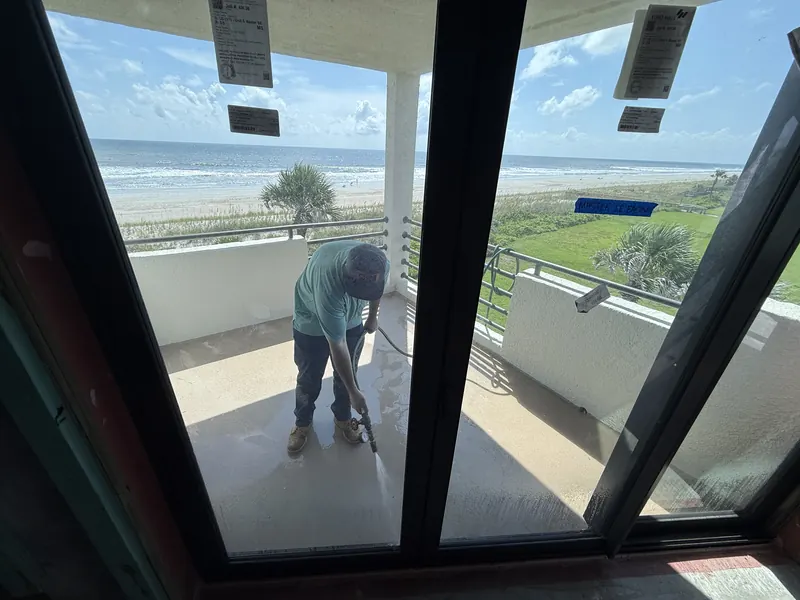
Newly installed units tested before the project moves on, so installation problems can be corrected while the installer is still on site.
Oceanfront condominium, Ponte Vedra BeachWhen the leak history points to a roof edge, a parapet, or another transition, those areas are tested the same way: one element at a time, with an observer inside.
A water test is only as good as its plan. The sequence below is how CSI runs a test from the first phone call to the final report.
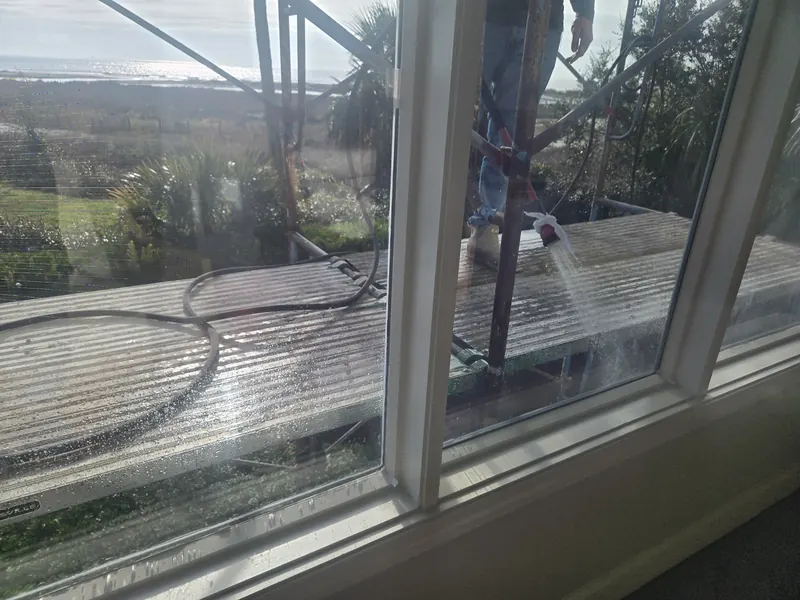
No single tool finds every leak. CSI matches the method to the element being tested and confirms what the water test shows with a second, independent measurement.
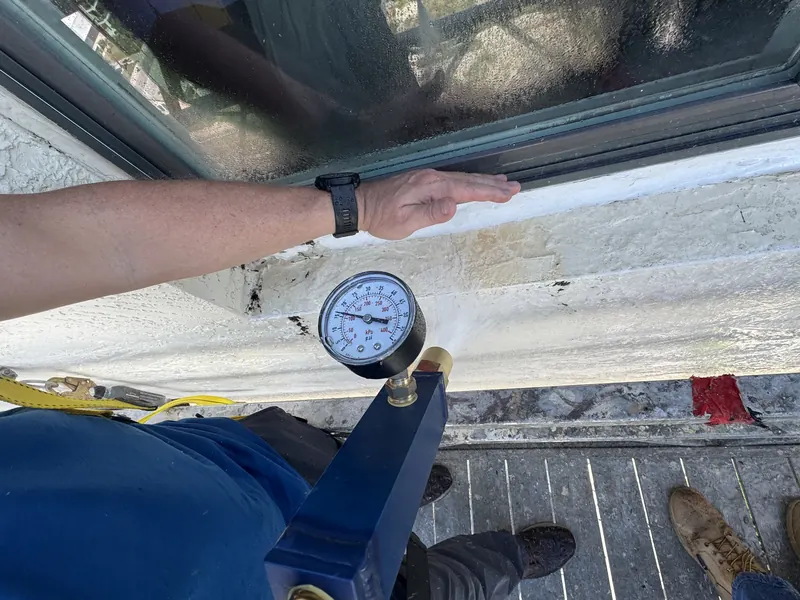
A spray nozzle fitted with a pressure gauge delivers a consistent stream of water to one joint or element. The nozzle and gauge setup is the one described in AAMA 501.2, which was written for storefronts, curtain walls, and sloped glazing. AAMA 511 gives guidance on adapting existing field test methods for leak investigations at windows and doors, including operable units. Consistent pressure and duration let one test be compared with the next and repeated after repairs.
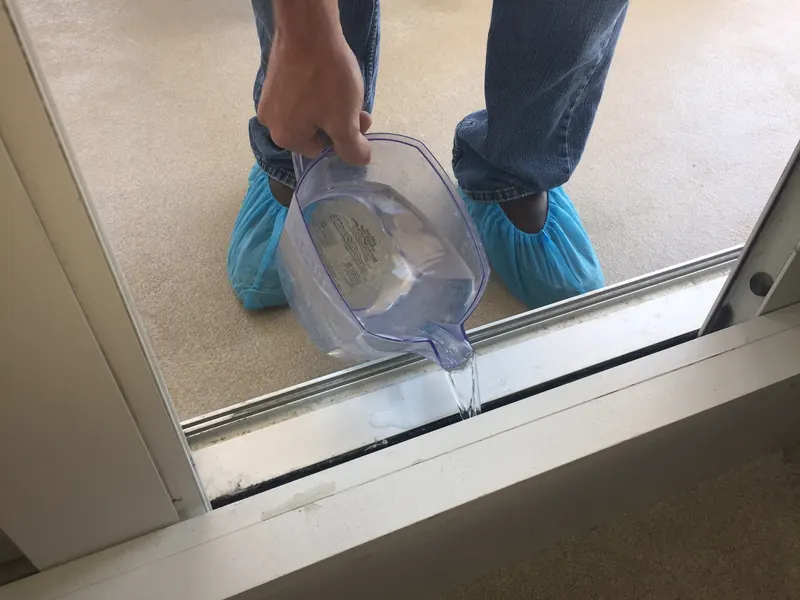
To test a threshold, a sill, or a railing post base on its own, a temporary dam is built around it and filled with water. This separates water entering through the element below from water entering through the joints above, which spraying alone cannot do.
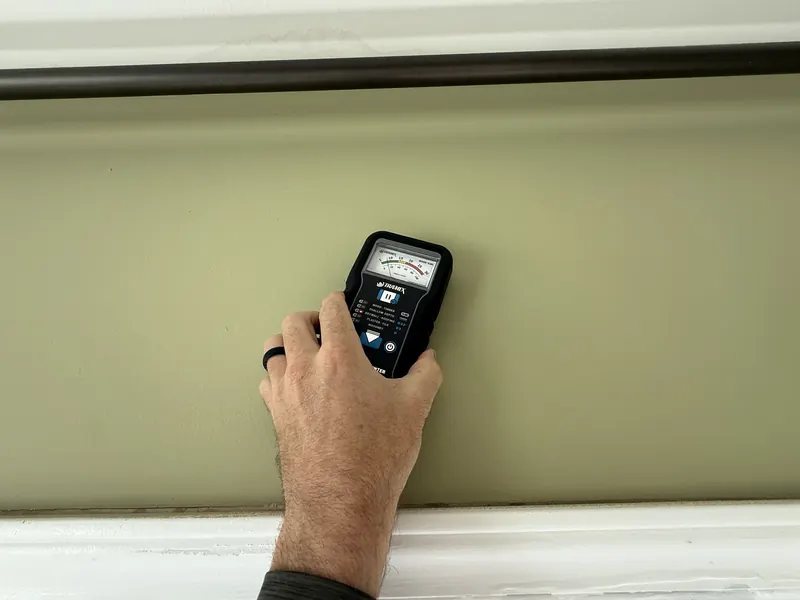
A moisture meter gives a measured reading at an interior wall, sill, or floor. Readings taken before, during, and after each test tie interior moisture to a specific test location instead of relying on a stain that may be months old.
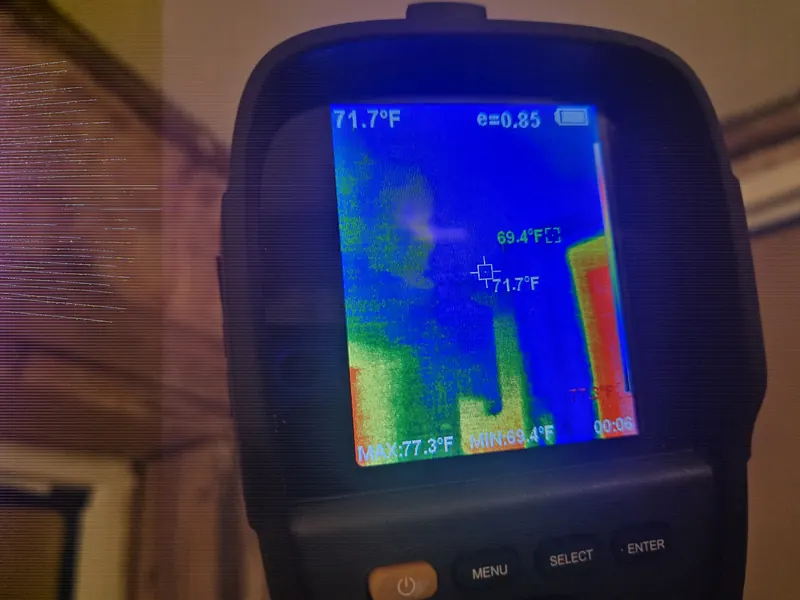
A thermal camera shows temperature differences across a wall or ceiling that can indicate wet materials, which helps follow water once it is inside the building. Infrared findings are confirmed with a moisture meter before they are reported as moisture.
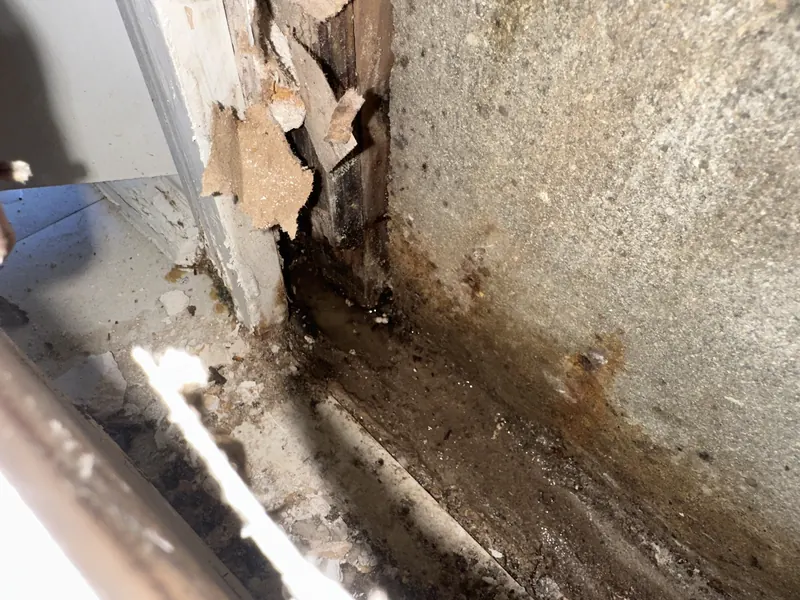
When the water path cannot be confirmed from the surface, a small inspection opening shows where water travels inside the wall, which flashing or sealant failed, and how much damage the framing, sheathing, or block has sustained. Openings are kept small and coordinated with the association in advance.
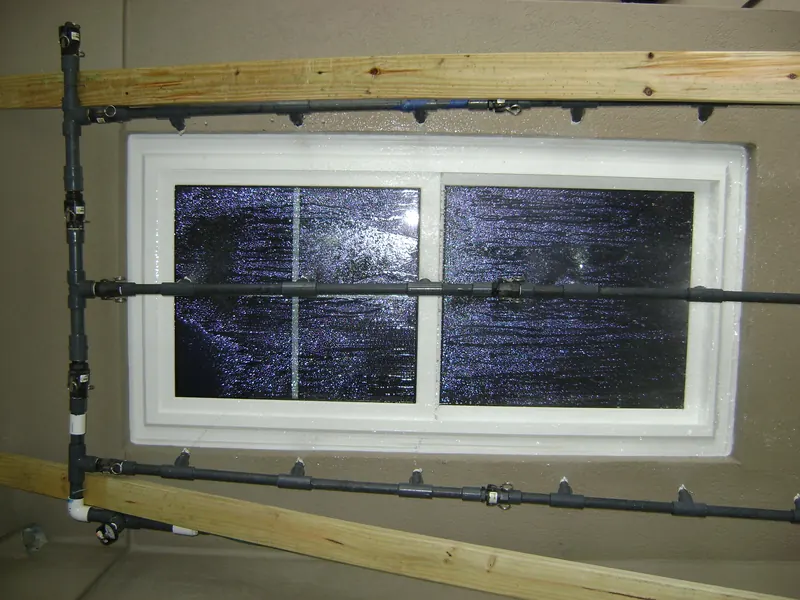
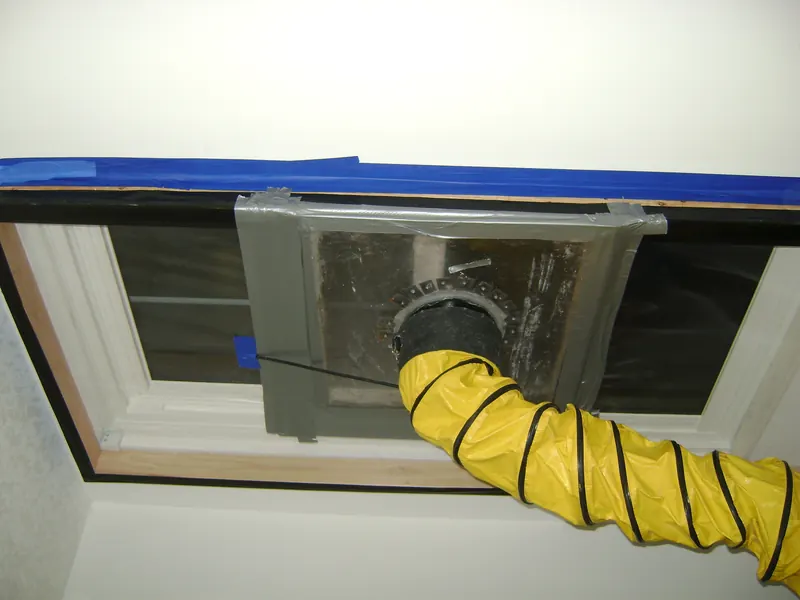
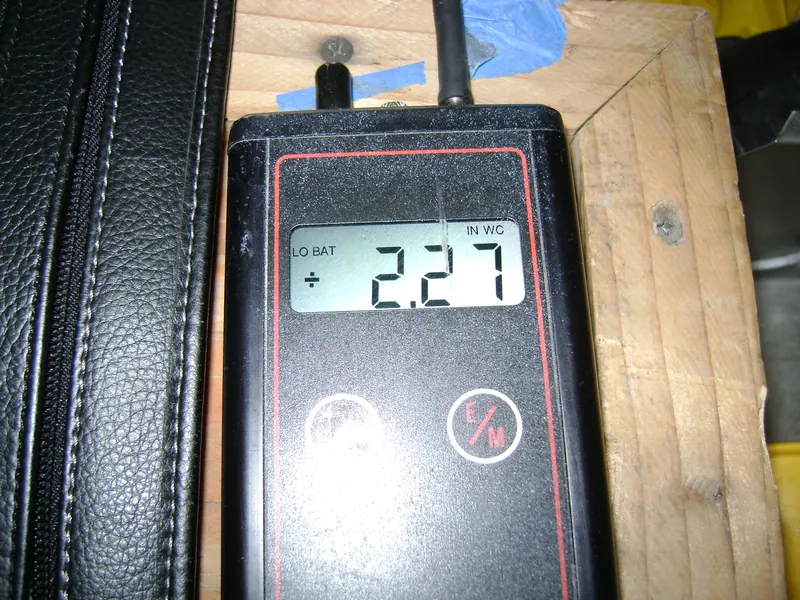
ASTM E1105 chamber testing wets the full exterior face of a window or door with a calibrated spray rack while a chamber sealed to the interior side creates an air pressure difference across the unit, simulating wind-driven rain. It is a widely specified field test for checking the water resistance of newly installed windows and doors, usually at a field test pressure set by the project specifications.
CSI's window and door replacement specifications require the contractor to field test installed units based on ASTM E1105, and require units that fail to be corrected and retested before the project moves on. CSI observes the testing and reviews the results as part of construction administration.
Related reading: window and door replacements in threshold buildings.
Most water tests involve occupied units, so a smooth test day depends on good notice and simple preparation.
The association or management company notifies owners of the test date, the units involved, and the access window, and CSI provides the schedule and preparation steps for that notice. Someone must be inside each unit during its test, because the interior observer is the person who sees the water arrive. Section 718.111(5)(a), Florida Statutes, gives a condominium association an irrevocable right of access to each unit during reasonable hours when necessary for the maintenance, repair, or replacement of the common elements or of any portion of a unit the association maintains, or to prevent damage to the common elements or to a unit. The association decides how that right applies to a particular test, and owners are welcome to be present.
Exterior crews may work from ladders, lifts, scaffolding, or a swing stage outside the unit. Expect water running on the windows, doors, and walls being tested, and a CSI team member inside watching the interior and taking readings.
Results go to the association, which decides on repairs and communicates with owners.
The report is written for the board and the manager who must act on it, with enough technical detail for the contractor who will make the repair.
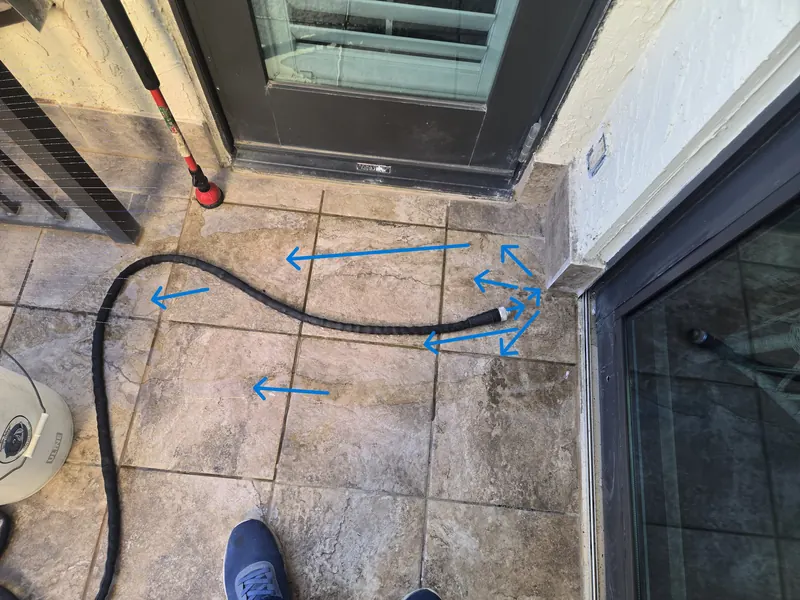
Coastal buildings in Florida take wind-driven rain on every elevation during tropical storms and summer thunderstorms, and salt air shortens the life of sealants, gaskets, and metal flashing. A leak that is not traced to its source tends to be repaired at the stain rather than at the point of entry, and it returns with the next storm.
Under section 718.112(2)(g), Florida Statutes, the structural integrity reserve study required for condominium buildings three habitable stories or higher must include windows and exterior doors, and waterproofing and exterior painting. Water testing is not required for the study, but test results give the engineer direct evidence of how those components are performing, which supports the remaining useful life and cost estimates. Leaks that reach the concrete structure can also contribute to the deterioration a milestone inspection is designed to find.
For more background, see CSI's guides to water intrusion investigation in Florida buildings, stucco and EIFS facade failures, and balcony, railing, and walkway inspections.
Tell us about the leak, or start with a look at the whole exterior. Neither option requires a commitment.
Send the property name and what is leaking. A CSI engineer will review the leak history with you, recommend a test scope, and provide a proposal.
An FAA Part 107-certified pilot and a licensed engineer conduct a twenty-minute exterior aerial assessment of your Florida property. The board receives a same-day preliminary findings memorandum identifying visible conditions such as balcony spalling, roof membrane wear, parapet deterioration, or envelope waterproofing issues that warrant closer engineering review. Zero cost. Zero obligation.
Water intrusion testing is a controlled field test that attempts to reproduce a reported leak under observation. Water is applied to one building component at a time, such as a window, a sliding glass door, or a section of stucco wall, while an observer watches the interior. When water appears inside, the test has located a point of entry, which is the information a lasting repair depends on.
CSI's diagnostic testing is based on AAMA 501.2, the nozzle field check written for storefronts, curtain walls, and sloped glazing, which defines the nozzle and gauge setup CSI uses; AAMA 511, FGIA's voluntary guide for the forensic evaluation of water intrusion at windows and doors; and ASTM E1105, the field test method for water penetration under an air pressure difference. Diagnostic testing adapts these methods to find the source of an existing leak, and the report states exactly how each test was run.
A nozzle test applies a controlled stream of water to one joint or component, which makes it the right tool for finding where an existing leak starts. A chamber test based on ASTM E1105 wets the whole window or door with a spray rack while a chamber sealed to the interior side creates an air pressure difference that simulates wind-driven rain. Chamber tests are typically used to check the water resistance of newly installed windows and doors.
CSI's water testing team works under the direction of a licensed professional engineer. The engineer reviews the leak history, plans the test sequence, reviews the results, and is responsible for the conclusions and repair recommendations in the report.
It depends on how many windows, doors, and wall areas are being tested and what access equipment is needed. A single unit with a few suspect openings can often be completed in part of a day, while a building-wide program on a high-rise with swing stages or lifts is scheduled over several days. CSI provides the association with a schedule before the test day.
Someone needs to be inside the unit during the test, because the interior observer is the person who sees the water arrive. That is usually a CSI team member, with access arranged through the association or the management company. Owners are welcome to be present.
Move furniture, rugs, and stored items away from the windows and doors being tested, take down or tie up window treatments, relocate electronics and valuables near the openings, and secure pets. CSI protects the floor at each test location before water is applied.
The test is controlled and observed. Water is applied to one area at a time, and the test at that location stops when the observer sees water inside. Because the purpose is to reproduce an existing leak, a small amount of water may reach the interior where the unit already leaks, which is why the area is protected first. If a wall must be opened to confirm the water path, the opening is kept small and is coordinated with the association in advance, and who patches the opening and restores finishes is set in the proposal before testing begins.
No. Testing is scheduled for dry weather. Rain wets the exterior and the wall assembly before the test begins, which makes it impossible to tell whether water inside came from the test or from the weather. After heavy rain, walls may need time to dry before moisture readings are reliable.
No. Infrared thermography shows temperature differences that may indicate wet materials, which makes it a useful screening tool, but it cannot show where water entered the building. CSI uses infrared imaging and moisture meters to narrow the search and controlled water testing to locate the point of entry.
The report includes the leak history reviewed, a plan of the test locations, each test with the component tested, the method, the duration, and the result, photographs of the setup and of any water observed, moisture readings, the engineer's conclusions on the source of each leak the testing reproduced, a note of any reported leak that could not be reproduced, and repair recommendations. CSI can also prepare repair specifications for bidding and retest the repaired areas.
Yes. Field testing installed units can find installation problems while the installer is still on site, before the rest of the building is completed the same way. CSI's window and door replacement specifications require field water testing of installed units based on ASTM E1105, and require units that fail to be corrected and retested.
Under section 718.112(2)(g), Florida Statutes, the structural integrity reserve study required for condominium buildings three habitable stories or higher must include windows and exterior doors, and waterproofing and exterior painting. Water testing is not required for the study, but test results give the engineer direct evidence of how those components are performing, which supports the remaining useful life and cost estimates. Leaks that reach the concrete structure can also contribute to the deterioration a milestone inspection is designed to find.
CSI performs water testing throughout Northeast Florida, including Amelia Island, Fernandina Beach, the rest of Nassau County, Jacksonville, the Jacksonville beaches, Ponte Vedra Beach, and St. Augustine, as well as coastal Georgia and Hilton Head, South Carolina. CSI works from offices in Fernandina Beach and Ponte Vedra Beach and can be reached at (904) 261-8703.
Headquarters: 961687 Gateway Boulevard #101C
Fernandina Beach, Florida 32034
Branch: 3203 Sawgrass Village Circle, Ponte Vedra Beach, Florida
Phone: (904) 261-8703
Email: info@csidesign.com
Hours: Monday through Friday, 8:00 AM to 5:00 PM
Water testing for condominium associations and commercial buildings from Amelia Island and Fernandina Beach to Jacksonville, Ponte Vedra Beach, and St. Augustine, plus coastal Georgia and Hilton Head, South Carolina.
CSI headquarters, Fernandina Beach, Florida.
Send the unit numbers, the leak history, and any photos. CSI will recommend a test scope and provide a proposal.
Request a Water Test