
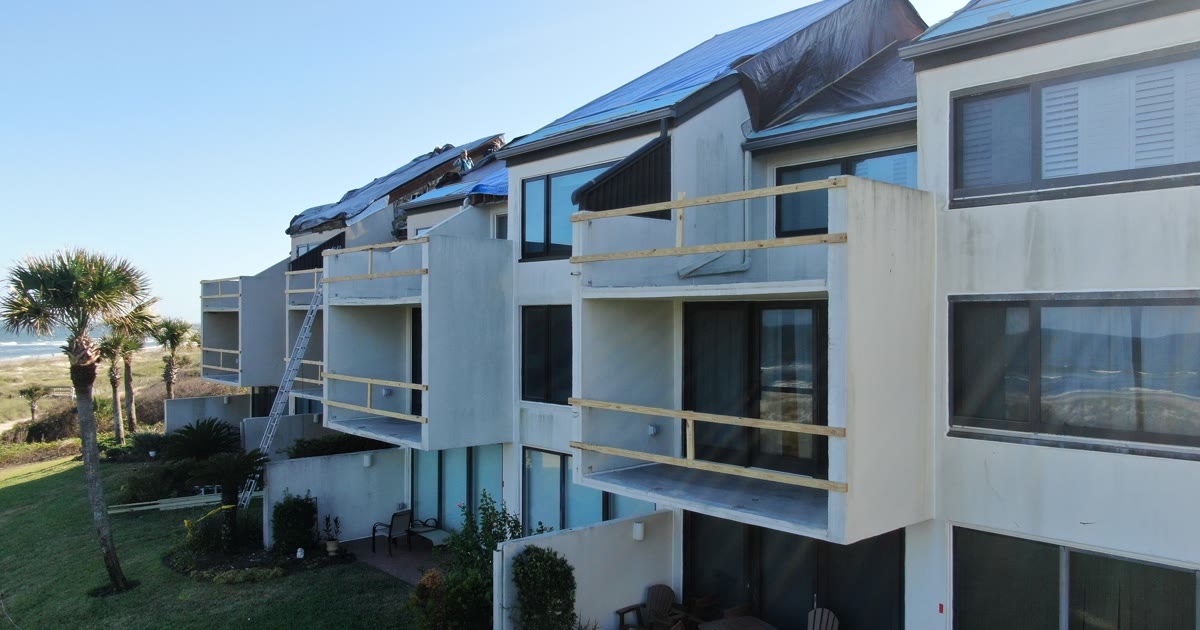
If a phase two milestone inspection identifies substantial structural deterioration in your building, your board should assume that nobody outside the board is tracking what happens next. That is the practical conclusion from the first statewide accounting of Florida's milestone inspection program, published in July 2026 by the Office of Program Policy Analysis and Government Accountability, the Florida Legislature's own research arm.
The report is short on drama and long on numbers, which is what makes it useful. It is also the first data set that lets a board compare its own situation against the rest of the state rather than against anecdote.
What the report counted
Across 2024 and 2025, local enforcement agencies reported 8,736 completed phase one milestone inspections and 1,575 completed phase two inspections. Local agencies granted 1,587 extensions to initial milestone inspection completion deadlines, and 94 percent of those extensions went to coastal counties and municipalities. Building departments received 903 permit applications for repairs identified in phase two inspections, with costs running from under $1,000 to $30 million.
Three figures deserve a board's full attention.
First, local agencies designated 30 buildings unsafe or uninhabitable in 2024 and 24 more in 2025. Of the 30 buildings designated in 2024, five were vacated. None of the 24 buildings designated in 2025 were vacated. Fifty four buildings carried an unsafe designation and five of them emptied.
Second, only 71 percent of local enforcement agency jurisdictions reported data to the state for 2024, and that figure fell to 64 percent for 2025. Roughly a third of Florida's building departments did not report at all in the most recent year.
Third, the extension pattern is not evenly distributed. Coastal jurisdictions, which is to say the jurisdictions with the salt exposure, the older beachfront inventory and the highest concentration of three story and taller condominium buildings, account for nearly all of the schedule relief being granted.
Why the unsafe designation gap matters
An unsafe designation is a determination by a local building official. It is not by itself an evacuation order, and the decision to vacate rests with local officials applying local ordinances. Boards sometimes read the two as the same thing and conclude that because their building has not been ordered empty, the finding is not urgent.
That reading is backwards. The gap between 54 designations and 5 vacancies tells you that buildings are operating with known, documented structural conditions while repairs are pending. For a board, the exposure that comes with that is not theoretical. It is a documented condition, in a sealed engineering report, that owners and insurers and any future buyer will eventually read.
What the statute actually obligates your board to do
Section 553.899, Florida Statutes, sets the framework, and the deadlines run in a specific order.
Phase two is triggered when any substantial structural deterioration is identified during phase one. Under subsection (7)(b), within 180 days after the phase one report is submitted, the architect or engineer performing the phase two inspection must submit a phase two progress report to the local enforcement agency with a timeline for completion of the phase two inspection. There is no separate statutory deadline for the completed phase two report itself. The completion date is governed by the timeline in that progress report and by whatever timelines and penalties the local enforcement agency has prescribed under subsection (10).
Under subsection (8), the architect or engineer who performed the inspection submits a sealed copy of the report, plus a separate summary of the material findings and recommendations, to the association, to any non condominium owner of a portion of the building, and to the building official of the local government with jurisdiction. The inspector makes that submission, not the association.
Under subsection (9), within 45 days after receiving the report, the association must distribute the inspector prepared summary to every unit owner by mail or personal delivery and by electronic transmission, post a copy conspicuously on the property, and publish the full report and the summary on the association website if the association is required to maintain one. This obligation applies regardless of what the report found.
Under subsection (11), local governments must adopt an ordinance requiring repairs for substantial structural deterioration to be scheduled or commenced within a specified timeframe after the local enforcement agency receives a phase two report, and in any case repairs must be commenced within 365 days after receiving that report. If the owner fails to submit proof that repairs have been scheduled or commenced, the local enforcement agency must review and determine whether the building is unsafe for human occupancy.
Five things a board should do this quarter
Confirm your building's inspection trigger. A building three habitable stories or more that is subject in whole or in part to condominium or cooperative ownership must have a milestone inspection by December 31 of the year it reaches 30 years of age, measured from the date the certificate of occupancy was issued, and every 10 years after. A local enforcement agency may set the trigger at 25 years based on local circumstances. Check with your building department rather than assuming the 30 year default applies.
Verify that your report was actually received by the local agency. Given that a third of jurisdictions did not report data to the state, do not assume the chain of custody worked. Keep your own dated proof of submission.
Calendar the 45 day owner distribution. This is the deadline boards miss most often, and it is the one an owner can most easily document.
Calendar the 365 day repair commencement date from the phase two report, then work backward through design, bidding and permitting. Twelve months sounds generous until a repair scope has to be engineered, competitively bid and permitted in a coastal jurisdiction.
Coordinate the structural integrity reserve study with the inspection. Under section 718.112(2)(g), a residential condominium association must have a structural integrity reserve study completed at least every 10 years for each building three habitable stories or higher. The current compliance deadline is December 31, 2025, and an association required to complete a milestone inspection on or before December 31, 2026 may complete the reserve study at the same time. In no event may the study be completed after December 31, 2026.
The short version
The state now has a number for how many Florida buildings are carrying a documented unsafe designation, and it is larger than the number that have been emptied. Boards that treat a phase two finding as a compliance formality are relying on an enforcement system that, by the Legislature's own measurement, is not reporting consistently. The boards that come out of this well are the ones that run their own calendar.
Construction Solutions, Inc. has performed milestone inspections, structural integrity reserve studies and building forensics for condominium and homeowner associations across Florida, Georgia and South Carolina since 1995. If your board is working through a phase one finding, a phase two scope or a December 2026 deadline, call 904-261-8703 or use the contact form to reach our Fernandina Beach or Ponte Vedra Beach office.
Sources. Office of Program Policy Analysis and Government Accountability, Report 26-04, Milestone Inspection Reporting Data, July 2026. Sections 553.899 and 718.112(2)(g), Florida Statutes, as amended by chapter 2025-175, Laws of Florida.
Questions about your building's compliance picture?
CSI helps Florida condominium boards turn milestone inspection findings into a practical compliance calendar for owner notice, engineering, permitting, reserve coordination, and repairs.
Request a building assessmentPreparing for a meeting? Schedule a board presentation for your directors.